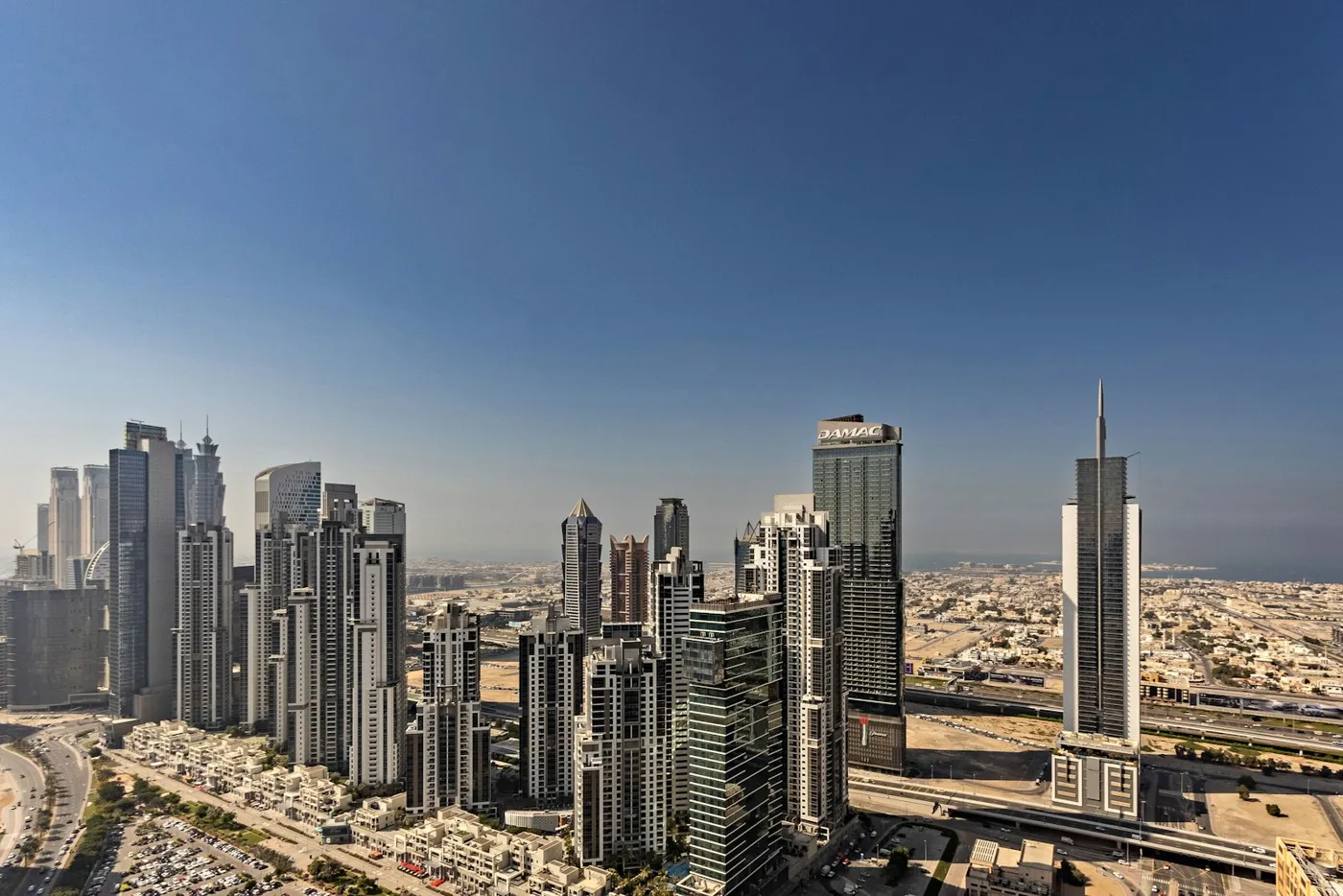


Dubai’s residency policies have changed who buys property in the emirate and why. A decade ago most expatriates rented, because their right to stay depended on a job. Today a buyer can tie a long-term residence permit to a property, and that shift is one of the quiet engines behind the market’s growth, and residency policies are a major part of that story.
This article explains how residency policies in the UAE connect to Dubai real estate: which visas matter, what they changed in buyer behaviour, what the latest market figures show, and where buyers still need to check the rules. We updated the visa facts against official pages of the Federal Authority for Identity, Citizenship, Customs and Port Security (ICP) and the Dubai Land Department (DLD) on 14 October 2026. Rules and fees can change, so treat this as general information, not legal advice.
Table of Contents
- From Temporary Work Hub to Long-Term Home
- Which Residency Policies Matter for Property Buyers
- The Golden Visa Route: What Official Pages Say
- Investor-Friendly Rules Behind the Visas
- Why Residents Are Buying Instead of Renting
- What the Latest Market Figures Show
- A Lifestyle Destination, Not Just a Workplace
- Limits and Risks Buyers Should Know
- How to Use Residency Policies in Your Buying Plan
- Frequently Asked Questions
From Temporary Work Hub to Long-Term Home
For many years the UAE, and Dubai in particular, was seen as a place to work for a few years and then leave. Most residents held short visas linked to an employer. Renting was the natural choice, because nobody wanted to own an apartment they might have to abandon if a contract ended.
That model has been changing step by step. Federal and local authorities, including the DLD, have reshaped residency policies with long-term residence categories, clearer ownership rules and digital property services. The strategic goal is plain: attract long-term investors and make Dubai a place where people live, not only a place where they work.
For the property market, this matters because residency and ownership now reinforce each other. A buyer who can secure a stable status is more willing to commit capital, and a market full of committed owners tends to be steadier than one driven by short-term traders.
Which Residency Policies Matter for Property Buyers
Not every visa affects the housing market in the same way. Three groups of residency policies stand out for people who want to buy.
Employment and family visas
These remain the most common way to live in Dubai. They give stability for as long as the job or sponsor lasts, but they do not by themselves give a long-term safety net. Many residents on these visas still rent for that reason.
Golden Residency
The ICP describes Golden Residency as a long-term programme for selected groups, including investors in public investments or in the UAE real estate sector. For real estate investors, the ICP lists a residency duration of 10 years. The permit does not depend on an employer, and it is the main link between residency policies and property ownership. We cover it in detail in the next section.
Other long-term categories
The ICP also describes the Green Residence, a long-term residency programme valid for five years. It is not tied to buying property, but it shows the wider direction of UAE residency policies: fewer sponsor-dependent visas and more long-term options.
The Golden Visa Route: What Official Pages Say
The DLD service page for the investor Golden Visa says it allows a real estate investor who owns property worth AED 2 million or more at the time of purchase to apply for a 10-year renewable residence permit. The spouse, children and parents can be sponsored. For a mortgaged property, the DLD asks for a bank letter showing the AED 2 million paid amount.
Two points deserve care. First, some older guides still describe a five-year real estate visa or a lower entry threshold. We found no current DLD or ICP page that supports those figures for the investor Golden Visa, so check any lower-value route directly with the DLD before you rely on it. Second, a single property rarely fits every case. Off-plan units, mortgages and joint ownership each have their own conditions.
The DLD lists the total government fees for the 10-year investor permit at AED 9,884.75, covering the medical test, Emirates ID, residency confirmation, DLD and administrative fees. Fees can change, so confirm the current amount when you apply.
For a full walkthrough of the documents, the bank letter and the application steps, read our guide to the Dubai Golden Visa by property. This article stays on the bigger question: how these residency policies shape the market.
You can verify the programme on the official ICP Golden Residency guide and the DLD investor Golden Visa service page.
Investor-Friendly Rules Behind the Visas
Visas alone would not have changed the market, and residency policies work only alongside property law. They work because they sit on top of a set of ownership and transparency rules that make buying simpler for foreigners. In recent years the UAE has pushed several reforms:
- Freehold ownership for foreigners in designated areas of Dubai, so buyers can hold title to their property.
- Digital registration through the DLD, which shortens purchase and transfer procedures.
- Escrow and regulation of off-plan sales, so buyer payments are controlled under the supervision of the real estate regulator.
- Greater transparency, with official data, approved brokers and registered contracts.
Together these rules and residency policies lower the cost and risk of entry. When strong residency policies are paired with clear property law, a foreign buyer can see a complete path: buy, register, apply for residency and, in suitable cases, bring the family.
If you are comparing the practical steps, our overview of property purchase conditions in Dubai in 2026 lists the requirements, costs and documents in one place.
Why Residents Are Buying Instead of Renting
The clearest effect of the new residency policies is a change in everyday behaviour. Compare the two situations.
Before
- Short visa tied to an employer
- Uncertainty about the future
- Renting as the safe choice
Now
- Long-term residence options that do not depend on a single job
- Greater stability for families
- Higher rents that push residents to compare renting with owning
The logical result of these residency policies is that more people consider buying. For many households the monthly cost of a mortgage can be comparable to the rent for a similar home, although this depends on the price, the down payment and the interest rate. Buying then offers two things at once: a property that can hold or grow its value, and, in the right cases, a route to long-term residency.
Non-resident buyers can also finance a purchase in some cases. Our guide to a mortgage in Dubai for non-residents explains what banks usually ask for.

What the Latest Market Figures Show
The data supports the idea that confidence is high. According to figures released by the DLD and reported by Gulf News, Dubai recorded total real estate transactions of Dh917 billion in 2025, a 20 percent rise on 2024 in both value and volume. The market handled about 270,000 transactions, the highest level in its history, and the number of new investors reached 129,400.
The leadership also keeps a long-term target: the Dubai Real Estate Sector Strategy 2033 aims for Dh1 trillion in annual transactions by 2033. You can read the original report on Gulf News.
It would be wrong to credit residency policies alone for these results. Population growth, new launches, global wealth movements and a strong economy all play a part. But long-term residency policies make demand more durable, because it turns a visitor into a stakeholder. That is why analysts often describe the market as moving from speculation toward maturity.
We have not found an official DLD figure that separates how many 2025 buyers applied for a Golden Visa, so we do not quote one here.
A Lifestyle Destination: How Residency Policies Keep Families
Long-term residency policies encourage families to relocate and to stay for years instead of months. That changes what people look for in a home. Instead of a small unit near the office, they want space, schools, parks and community facilities.
The attractions are familiar: international schools, high safety standards, modern infrastructure and a premium lifestyle. For real estate, the effect is a rise in end-user demand, less short-term speculation and, over time, greater price stability in family-oriented communities.
Buyers who plan to stay should look beyond the visa and compare areas by commute, school access and community type. Our guide to buying property in Dubai is a good starting point for that comparison.
Limits and Risks Buyers Should Know
A visa is not a guarantee of profit. Before you buy because of residency policies, keep these limits in mind:
- The property is an investment first. Prices can fall as well as rise, and a visa does not change that.
- Rules are updated. Thresholds, fees and conditions can change, and different official pages sometimes describe them differently.
- Each case is different. Mortgaged, off-plan and jointly owned properties may need extra documents or approvals.
- Total costs matter. Registration fees, service charges and agency fees add to the purchase price.
The safest approach to residency policies is to confirm the current requirements with the DLD or the ICP, and to review the sale contract and developer record before you pay a deposit.
How to Use Residency Policies in Your Buying Plan
If long-term residency is one of your goals, a simple order of steps helps:
- Define the goal. Decide whether you want a home, a rental investment, or both, and whether the residency permit is essential or a bonus.
- Check eligibility early. Read the current DLD and ICP pages for the visa you want and note the value threshold and the documents.
- Choose a property that fits. Compare ready and off-plan units, and confirm the project status and payment structure.
- Register the purchase. Complete the sale through the DLD and keep every receipt and contract.
- Apply for the visa. Submit the application through the official channel with the title document and the other required papers.
- Plan for renewal and costs. Keep the ownership conditions in place and budget for service charges and annual costs.
Summary: How Residency Policies Support the Market
Dubai’s residency policies, led by the Golden Visa and supported by investor-friendly property rules, have helped turn a temporary market into a more stable one. They reduce dependence on rental housing, attract long-term investors and give families a reason to settle. The result of these residency policies is a market that rests more on end-users and less on short-term speculation.
The details of residency policies still matter. Read the official pages, verify the thresholds and talk to an adviser before you commit.
Frequently Asked Questions About Residency Policies and Dubai Real Estate
How do residency policies affect Dubai real estate?
Long-term residency policies make buyers more confident to stay and invest. People who once rented because of short visas now consider ownership. This raises end-user demand, supports foreign investment and helps move the market away from short-term speculation toward more stable, long-term ownership.
Can I get a Golden Visa by buying property in Dubai?
Yes, in principle. The DLD says an investor who owns property worth AED 2 million or more at the time of purchase can apply for a 10-year renewable residence permit. Mortgaged, off-plan and joint-ownership cases have extra conditions, so confirm yours with the DLD before buying.
Is the real estate Golden Visa valid for 5 or 10 years?
The ICP and the DLD both describe a 10-year residency for real estate investors under the Golden Residency programme. Some older articles mention five years or lower property values. Check the current DLD and ICP pages before you plan around any other figure.
Can my family be included in my residence permit?
According to the DLD investor Golden Visa page, the spouse, children and parents can be sponsored. Each family permit has its own fees and documents. Confirm the current list of eligible relatives and the costs with the DLD when you apply.
Does a mortgaged property qualify for the investor Golden Visa?
It can, but the DLD asks for a bank letter that confirms AED 2 million has been paid as proof. A mortgage with only a small down payment may therefore not qualify. Speak to your bank and the DLD before you sign the contract.
Do residency policies guarantee a profit on my property?
No. A visa gives you the right to stay, not a return on the property. Prices, rents and demand can move in either direction. Treat the residency permit as a benefit and judge the purchase on price, location, costs and your own budget.
Next Step
Planning to buy in Dubai and want to understand the residency options? The Master Real Estate team can help you compare projects, review payment plans and understand the paperwork. Contact us for a free consultation.
Sources checked: UAE Government Portal, residence visas for general visa information, plus the ICP, DLD and Gulf News pages linked above.