
Changes in Investment Attraction Laws in the UAE Real Estate Market (Full Analysis)
The United Arab Emirates has introduced a major and strategic shift in its real estate and investment policies in 2026, with a clear objective:
👉 To attract more investors from around the world, especially mid-level and semi-capital investors
🔗 Sources related to this news:
- https://maharashtratimes.com/business/real-estate-news/dubai-real-estate-investor-visa-rule-change-uae-removes-minimum-property-value-rule/articleshow/130671992.cms
- https://www.arabianbusiness.com/real-estate/dubai-real-estate-demand-steady-as-95-of-2026-homes-already-sold
- https://www.thenationalnews.com/business/property/
🏛️ What is the core of the story?
In the past, for a foreign investor to:
- Obtain residency
- Or enter investment programs through property purchase
They typically had to:
- Buy a property with a minimum value requirement (usually around AED 750,000 to AED 2 million)
However, under the new changes:
👉 These strict requirements have been relaxed or made more flexible
🔄 What exactly has changed?
The new reforms include several key points:
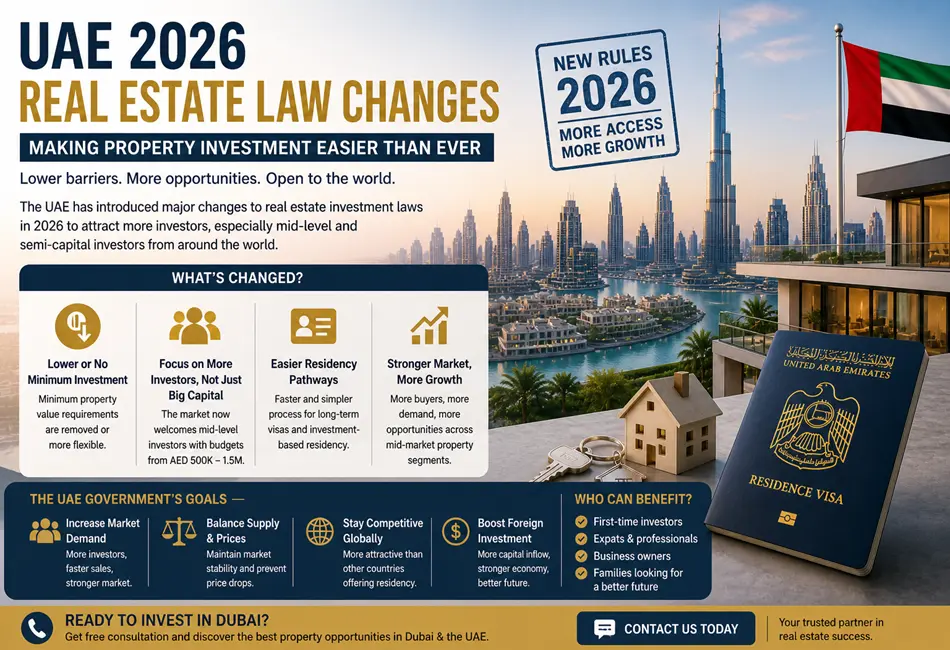
1️⃣ Reduction or removal of minimum investment requirements
- In some programs, the minimum property price is no longer the main condition
- Or:
- Entry with lower capital is now possible
- Residency conditions have become easier
2️⃣ Focus on “more investors,” not just “big capital”
Previously, the UAE market mainly targeted:
- High-net-worth individuals
- Luxury property buyers
Now:
👉 The focus has shifted to mid-range investors
For example:
- Investors with budgets between AED 500,000 to AED 1.5 million
3️⃣ More flexible visa and residency pathways
The new regulations have made:
- Obtaining residency through property simpler and faster
- More pathways available for:
- Long-term visas
- Investment-based residency
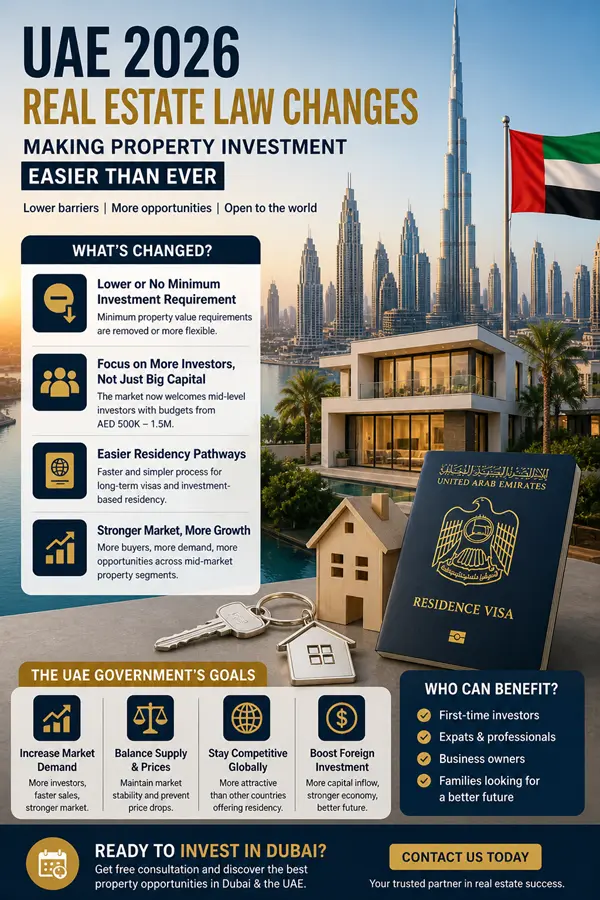
📰 “Buy Property in Dubai Without Massive Capital – A Major 2026 Policy Shift”
🎯 What is the government’s real goal?
The government of the United Arab Emirates is pursuing several key objectives:
✅ 1. Increase market demand
By attracting more investors:
- Projects sell faster
- The market is protected from potential slowdown
✅ 2. Offset downward price pressure
Due to:
- Increased supply
- Potential price corrections
This policy helps:
👉 Keep the market balanced rather than declining
✅ 3. Compete with other countries
Countries such as:
- Turkey
- Portugal
- Greece
Offer residency-through-property programs
The UAE aims to:
👉 Become more competitive and attractive globally
✅ 4. Boost foreign capital inflow
The broader goal:
- Increase capital inflows into the economy
- Strengthen construction and service sectors
📊 What is the impact of this policy on the market?
🟢 Positive effects
- Increase in number of buyers
- Activation of the mid-range property segment
- Growth in mid-market developments
🟡 Neutral / mixed effects
- Increased competition among sellers
- Buyers gain more choices
🔴 Potential risks
- If supply grows too much:
- Prices may face further pressure
- Possibility of short-term speculative investors entering the market
🧠 Professional insight (very important)
This decision shows that:
👉 The real estate market in Dubai and the UAE has entered a new phase:
- From a luxury-focused, limited market
- To a broader and more accessible market
In other words:
The UAE wants even mid-level investors to be able to enter the market
📌 Simple conclusion
- New policy = More open market access
- Lower entry capital = Easier than before
- Goal = Attract more investment and sustain market growth
For free consultation and access to the latest property opportunities in Dubai and the UAE,
get in touch with Master Real Estate.
We guide you in choosing the right project, reviewing payment plans, obtaining residency,
and building a secure and profitable investment strategy.
With access to updated below-market property listings and expert market insights,
you can confidently make decisions and start your Dubai property journey the smart way.