
Publication date: 2 August 2026
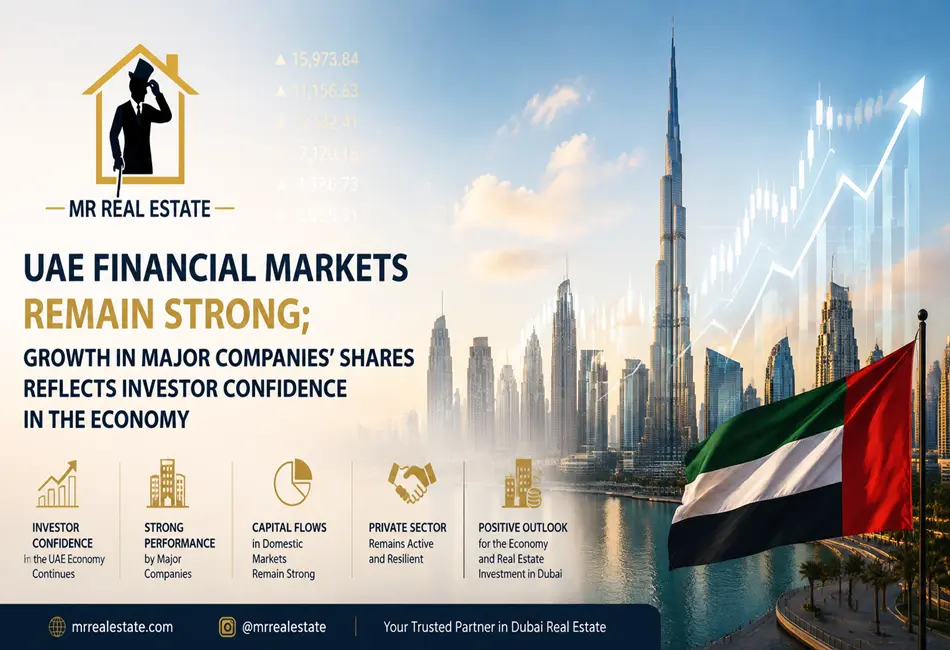
The UAE financial markets ended the latest trading week with a positive performance. Higher values for major companies’ shares and stronger results across several sectors suggest that investors still trust the strength of the UAE economy and its growth prospects.
For anyone who follows Dubai and the wider Emirates, the UAE financial markets are more than a list of share prices. They show how confident investors are, how much capital is flowing into local companies and how the private sector is performing. They also influence other asset classes, including real estate.
In this article we explain what the latest trend means, how the UAE financial markets are organised, why they matter for the national economy and what they could mean for people who invest in Dubai property. We do not quote prices or index levels, because only the trend was reported; for live figures, use the official exchange websites listed below.
Table of Contents
- What the Latest Trading Week Showed
- How the UAE Financial Markets Are Structured
- Why This News Matters for the UAE Economy
- What Drives Investor Confidence
- The Non-Oil Economy and Market Growth
- Impact on Dubai Real Estate
- Opportunities for Real Estate Investors
- Risks and Points to Watch
- How to Follow the Market
- Ready to Start Investing in Dubai?
- Frequently Asked Questions
- Sources
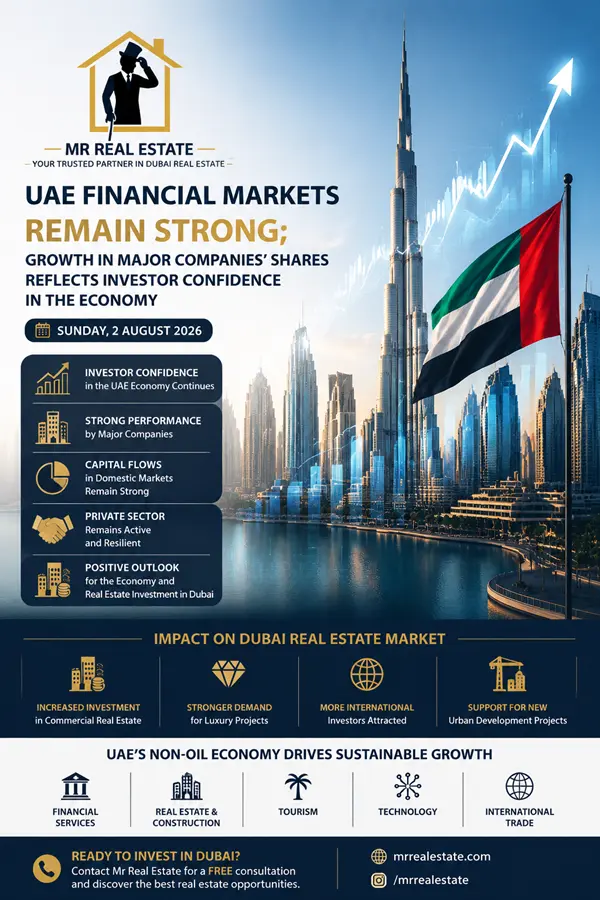
UAE Financial Markets Remain Strong: What the Latest Trading Week Showed
The UAE financial markets showed resilience despite regional challenges. Reports pointed to three supporting factors: positive corporate financial results, improved investor sentiment and continued government investment.
Source: Reuters, UAE stocks and earnings coverage.
- Share prices: major companies recorded gains, which lifted overall sentiment.
- Sector performance: several sectors performed better than in earlier weeks.
- Investor mood: confidence remained firm even with uncertainty elsewhere in the region.
A single positive week does not decide the direction of a market. Still, when gains come from earnings and not only from short-term speculation, they tend to be more durable. That is why analysts watch results announcements closely when they assess the UAE financial markets.
How the UAE Financial Markets Are Structured
Before judging the news, it helps to know where trading takes place. The UAE financial markets are built around a small number of regulated venues, each with its own list of companies.
Dubai Financial Market (DFM)
The Dubai Financial Market lists a wide range of companies from banking, real estate, transport, utilities and other sectors. Several well-known Dubai property developers trade here, which is one reason investors in Dubai real estate pay attention to its daily moves.
Abu Dhabi Securities Exchange (ADX)
The Abu Dhabi Securities Exchange is the main venue for companies based in the capital. It includes banks, energy-related firms, real estate and holding companies, and it reflects the weight of Abu Dhabi’s economy inside the UAE financial markets.
Nasdaq Dubai
Nasdaq Dubai operates from the Dubai International Financial Centre. It is known for international listings, including debt instruments and some investment vehicles, and it adds a global dimension to the UAE financial markets.
Together these venues give local and foreign investors regulated access to UAE companies. For official market information, visit the Dubai Financial Market and the Abu Dhabi Securities Exchange.
Why Is This News Important for the UAE Economy?
Capital markets are among the key indicators of a country’s economic health. Strong UAE financial markets suggest that:
- Investors continue to trust the UAE economy.
- Major companies are delivering solid financial performance.
- Capital flows into domestic markets remain healthy.
- The private sector continues to expand.
These signals matter because stock markets are forward-looking. Prices usually reflect what investors expect in the months ahead, not only what has already happened. When expectations are positive, companies can raise money more easily, hire more people and invest in new projects.
A thermometer for confidence
Think of the UAE financial markets as a thermometer. They do not explain every detail of the economy, but they quickly show whether the mood is warm or cold. A steady rise across many sectors is a better sign than a jump in one or two shares.
Source: Reuters, UAE stocks rise as earnings boost sentiment.
What Drives Investor Confidence in the UAE Financial Markets
Confidence rarely comes from one factor. In the UAE, several long-term elements work together to support the UAE financial markets.
Corporate earnings
Positive results from listed companies are the most direct driver. When banks, developers, logistics firms and utilities report healthy profits, investors are more willing to hold their shares. Earnings seasons therefore often set the tone for the whole market.
Government investment and policy
Public spending on infrastructure, digital services and urban development creates opportunities for private companies. Clear regulation and a business-friendly legal framework also help international investors feel comfortable placing capital in the country.
Open access for investors
The UAE has worked to make its markets accessible, with modern trading platforms and regulated exchanges. This openness brings both regional and global investors into the UAE financial markets, which can improve liquidity.
Economic diversification
Because the economy no longer depends only on oil, results from banks, real estate, tourism and trade help support the UAE financial markets even when energy prices change. The next section looks at this in more detail.
UAE’s Non-Oil Economy Continues to Drive Growth
In recent years the UAE has focused heavily on expanding non-oil sectors, including:
- Financial services
- Real estate and construction
- Tourism
- Technology
- International trade
This strategy has reduced the economy’s dependence on oil and has made the country a more attractive destination for global investors and international businesses.
Source: The National, UAE business and economy coverage.
For the UAE financial markets, diversification brings a broader mix of listed companies. A market made up of banks, developers, airlines, telecom operators and utilities usually reacts differently from one dominated by a single commodity. This mix can make the market more balanced over time.
You can read more about the national economy on the UAE Government Portal economy page.
Impact of the Strength of UAE Financial Markets on Dubai’s Real Estate Market
Strong UAE financial markets are usually closely connected to the property sector. When investors feel confident and their portfolios grow, they often look for other assets, and real estate is a natural choice.
Potential effects include:
- Increased investment in commercial real estate
- Stronger demand for luxury property projects
- Attraction of more foreign investors
- Support for new urban development projects
Dubai’s real estate sector remains one of the main pillars of the UAE economy, and growth in finance, tourism and international trade continues to support the market.
Source: Khaleej Times, Dubai and UAE property coverage.
The link between listed developers and property
Some of the largest developers are listed companies. When the market values them highly, they can fund new projects more easily. When sentiment weakens, financing can become more expensive. This is one direct channel between the stock market and the housing supply.
Wealth effect and foreign interest
Investors who see gains in one asset class may move part of their profit into another. Foreign buyers also look at the general health of the host economy before they choose a city. Our articles on foreign capital flowing into Dubai and on new global buyers in the UAE property market look at this trend from the property side.
Opportunities for Real Estate Investors
With capital inflows continuing and market confidence holding, property investors are still looking for opportunities in areas such as:
- Luxury apartments in Dubai
- Off-plan projects
- Commercial properties in economic hubs
- Developments near financial and business centres
DIFC, Downtown Dubai and Business Bay remain among the most attractive locations for investors, mainly because they sit close to offices, banks and leisure destinations.
Source: Khaleej Times.
Off-plan projects
Off-plan purchases let buyers pay in stages, which appeals to investors who want to spread their commitment. They also carry delivery and developer risk, so it is wise to verify the developer’s record, the project registration and the escrow arrangements before signing.
Commercial and mixed-use property
Companies expand when the economy is healthy, and that can support demand for office and retail space near business districts. Investors who follow the UAE financial markets sometimes use them as an early hint of such demand.
If you are new to the process, our guide to buying property in Dubai explains the main steps from budget to title deed.
Risks and Points to Watch
Even when the UAE financial markets are strong, a careful investor looks at the other side too. Markets can fall as quickly as they rise, and regional events can change sentiment fast.
- Volatility: share prices move daily, and a good week can be followed by a weaker one.
- Global conditions: interest rates, oil prices and international events can affect local markets.
- Supply in property: a large number of new launches can influence prices in specific areas.
- Concentration: relying on one sector or one developer increases risk.
Spreading investments across asset types and locations is a common way to reduce exposure. This article is general information and is not personal financial advice; consult a licensed adviser before you decide.
How to Follow the UAE Financial Markets Wisely
You do not need to be a trader to stay informed. A few simple habits are enough.
- Check the official exchange websites for prices and company announcements.
- Read earnings releases from companies in sectors that matter to you, such as banking and real estate.
- Compare market news with official property data from the Dubai Land Department.
- Look at trends over months, not single days.
Following the UAE financial markets alongside property data gives a more complete picture than either source alone. When both point in the same direction, the signal is stronger; when they differ, it is a reason to look deeper.
The news date for this report is Sunday, 2 August 2026. Market conditions change quickly, so check current information before acting on it.
The positive performance of the UAE financial markets at the beginning of August 2026 shows that investor confidence in the country’s economy remains strong. Economic stability, foreign investment, advanced infrastructure and growth in non-oil sectors have helped the UAE keep its position as one of the region’s leading economic and investment hubs.
Ready to Start Investing in Dubai?
For a free consultation and access to the latest property opportunities in Dubai and the UAE, get in touch with Master Real Estate. We guide you in choosing the right project, reviewing payment plans, obtaining residency and building a secure investment strategy.
With access to updated below-market property listings and expert market insights, you can make decisions with confidence and start your Dubai property journey the smart way.
Frequently Asked Questions About the UAE Financial Markets
What does it mean when the UAE financial markets remain strong?
It means the main stock exchanges, mainly the Dubai Financial Market and the Abu Dhabi Securities Exchange, are holding or growing in value. Rising share prices usually reflect solid company earnings, healthy liquidity and investor confidence in the wider UAE economy and its growth outlook.
Which exchanges make up the UAE financial markets?
The best known are the Dubai Financial Market (DFM) and the Abu Dhabi Securities Exchange (ADX). Nasdaq Dubai is a third venue, based in the Dubai International Financial Centre. Each one lists different companies, and together they form the core of the UAE financial markets.
How do the UAE financial markets affect Dubai real estate?
Stronger markets can raise investor confidence, create wealth and increase interest in assets such as property. Several large property developers are also listed companies, so their share performance reflects sentiment. The link is indirect, and property prices still depend on supply, demand and local regulation.
Is a strong stock market a guarantee that property prices will rise?
No. Stock markets and property markets often move in the same direction, but not always at the same speed. Interest rates, new supply, regulation and global conditions also matter. Treat market strength as one signal among many, and always compare it with transaction data from official sources.
Which Dubai areas attract investors when confidence is high?
Business-focused districts such as DIFC, Downtown Dubai and Business Bay are often mentioned, because they sit close to financial and commercial activity. Off-plan projects and commercial units also draw attention. Always review the developer, payment plan and permits before you commit to any purchase.
Where can I follow the latest news on the UAE financial markets?
Use the official websites of the Dubai Financial Market and the Abu Dhabi Securities Exchange for prices and announcements, the UAE Government Portal for economic information, and established business media for analysis. For property-specific data, check the Dubai Land Department and speak with a licensed adviser.
Sources
- Reuters – UAE stocks and earnings coverage
- Khaleej Times – Dubai and UAE property news
- The National – UAE business and economy news
- UAE Government Portal – economy information
- Dubai Land Department – official real estate news and market updates