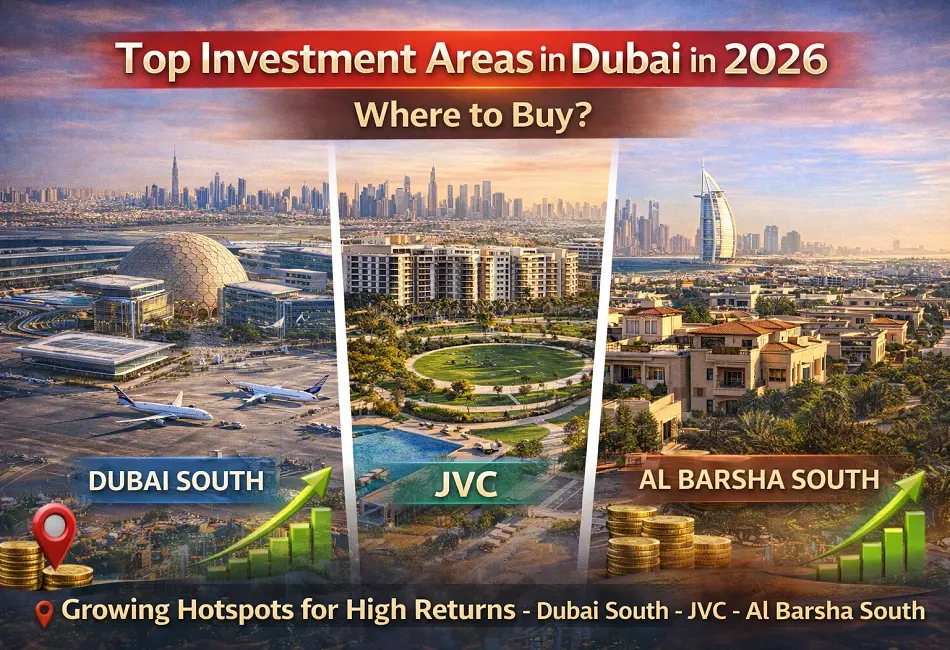

The Hot Investment Areas in Dubai are no longer only the famous waterfront names. In the first quarter of 2026, Dubai recorded AED 176.7 billion of property sales across nearly 48,000 transactions, and a large share of that activity sat in communities with newer supply and lower entry prices: Dubai South, Jumeirah Village Circle (JVC) and Al Barsha South.
This guide explains why these hot investment areas in Dubai attract buyers, what the 2026 data does and does not prove, and how to compare the areas before you commit. It updates our earlier overview with market figures from the first quarter, yield ranges, risks and links to our detailed area guides.
Table of Contents
- Hot Investment Areas in Dubai at a Glance
- What Makes an Area a Hot Investment Choice?
- What the 2026 Market Data Says
- 1) Dubai South: The Long-Term Growth Zone
- 2) JVC: Affordable Entry and Deep Rental Demand
- 3) Al Barsha South: Stable and Gradual Growth
- Other Areas on the Watchlist
- Comparing the Three Hot Investment Areas in Dubai
- Risks to Weigh Before You Buy
- How to Choose Among the Hot Investment Areas in Dubai
- Frequently Asked Questions
- Final Insight
Hot Investment Areas in Dubai at a Glance
If you only have a minute, this is the short version. Each of the three hot investment areas in Dubai below appears in Q1 2026 market reporting as a centre of transaction activity, and each fits a different type of investor.
- Dubai South: future-focused growth near Al Maktoum International Airport and Expo City, with some of the lowest entry prices in the city.
- JVC: a mid-range community with a deep tenant pool, many buildings and a strong buy-to-let reputation.
- Al Barsha South: a family-oriented district with villas and new developments, suited to steady, lower-risk investing.
None of these hot investment areas in Dubai is a guaranteed winner. The best choice depends on your budget, your time horizon and whether you want rental income now or capital growth later. The sections below give you the evidence and the trade-offs so you can decide with confidence.
What Makes an Area a Hot Investment Choice?
A district becomes one of the hot investment areas in Dubai when several factors line up at the same time. A single headline, such as a new metro line or a launch, is rarely enough. When we assess an area, we look at six signals:
- Entry price: how the average price per square foot compares with established districts.
- Transaction activity: whether Dubai Land Department data shows steady sales, not just a few large launches.
- Supply pipeline: how many new homes are due to be delivered, and when.
- Infrastructure: roads, transit, airports, schools and healthcare that make the area liveable.
- Rental depth: the number of tenants, typical vacancy and realistic net yield after service charges.
- Liquidity: how easily a unit can be resold or re-let without a large discount.
Use these six signals to rank every one of the hot investment areas in Dubai on your own list. Areas that score well on most of these points deserve a closer look. Areas that score well on only one, usually a low price, often turn out to be cheap for a reason. For a wider comparison across the city, read our guide to the best areas to buy property in Dubai in 2026.
What the 2026 Market Data Says
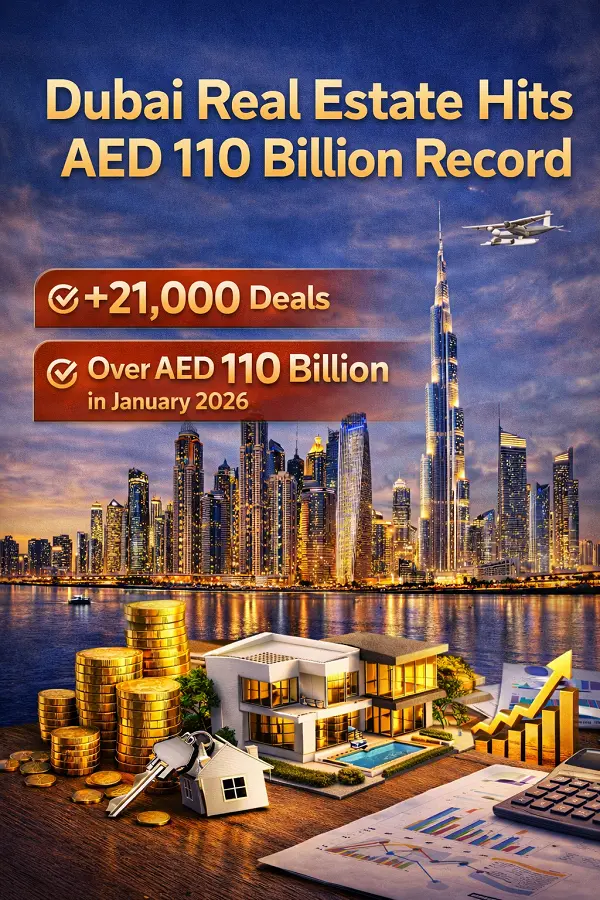
The latest quarterly figures show a market that is still growing, but in a more selective way. According to Gulf News, Dubai property sales reached AED 176.7 billion in Q1 2026 across nearly 48,000 transactions. Data from fäm Properties showed transaction value rising 23.4 percent year on year, while volume rose 5.5 percent. In other words, price strength, not only deal count, is driving the totals.
A separate analysis by Springfield Properties counted AED 138.7 billion in residential transactions across 44,150 deals, with commercial real estate adding AED 38.0 billion across 3,622 deals. The two sources use different methods, so treat the totals as consistent in direction rather than identical in detail.
Key figures for the hot investment areas in Dubai from Q1 2026
- Off-plan share: about 70 percent of transactions and value, driven by new launches and competitive pricing in emerging communities.
- March off-plan activity: more than 10,300 transactions worth AED 31.2 billion.
- Average residential price: AED 1,949 per square foot, with off-plan apartments around AED 2,100 and secondary villas around AED 2,354.
- Rental market: more than 139,000 rental transactions in the quarter.
The same reporting names the districts where activity concentrated: Dubai South, Jumeirah Village Circle and emerging districts offering new supply and competitive prices, with Al Barsha South Fourth and Al Yelayiss also seeing strong activity. That is why these communities lead our list of hot investment areas in Dubai for 2026.
A market that is normalising, not cooling
Context matters. Khaleej Times notes that the market has begun to normalise after rapid gains of 22 percent in 2023 and 18 percent in 2024, while demand fundamentals continue to support pricing and absorption. For investors, that means the easy, across-the-board gains are behind us. Careful selection among the hot investment areas in Dubai, and then among buildings, now matters more than timing the whole market.
You can also verify official figures yourself on the Dubai Land Department website, which publishes transaction information and services for buyers.
1) Dubai South: The Long-Term Growth Zone
Dubai South is a master-planned district built around Al Maktoum International Airport and close to Expo City Dubai. It is the area most often named when people ask which of the hot investment areas in Dubai has the longest runway for growth.
Why Dubai South ranks among the hot investment areas in Dubai
- Q1 2026 reporting lists Dubai South among the communities where transaction volumes concentrated.
- The district combines residential, logistics, commercial and aviation zones, so it is designed as a place to live and work rather than a dormitory suburb.
- Entry prices are among the lowest of the main investment communities, which lowers the barrier for first-time investors.
Growth drivers
The biggest driver is the planned expansion of Al Maktoum International Airport. Dubai’s ruler announced an AED 128 billion terminal programme, and reports describe a long-term design capacity of up to 260 million passengers a year, with five parallel runways. A Zawya press release on the expansion gives the headline figures. Treat the capacity as a long-term design target, not a near-term forecast, because the full build-out will take many years.
Expo City Dubai, built on the former Expo 2020 site, adds a second anchor. Its masterplan was approved in October 2024 and brings further employment, retail and leisure to the surrounding area. Together, the airport and Expo City give Dubai South a demand story that does not depend only on tourism or luxury buyers.
Yield and pricing
Broker data from Oliva, updated in April 2026, shows Dubai South gross yields of about 7.0 to 9.0 percent and net yields of about 4.5 to 6.5 percent, with vacancy of 8 to 12 percent and falling. These are broker estimates, not official figures, so verify them against current listings. Our guide to Dubai rental yield by area explains how to calculate net yield correctly.
Risks and who it suits
The main risk is timing. Infrastructure promises take years, and rents in a new district can lag behind until the population arrives. Dubai South suits investors with a medium to long horizon who are comfortable with off-plan payment plans and can wait for the district to mature.
Conclusion: Dubai South is the strongest long-term story among the hot investment areas in Dubai, but it rewards patience and careful project selection.
2) JVC: Affordable Entry and Deep Rental Demand
Jumeirah Village Circle, known as JVC, is one of the most active mid-range communities in the city. It offers a mix of apartments, townhouses and villas, and it consistently appears among the hot investment areas in Dubai because buyers can enter at a lower price than in central districts.
Why JVC is one of the hot investment areas in Dubai
- More affordable than central Dubai, which widens the pool of buyers and tenants.
- A central position that keeps Dubai Marina, Internet City and Dubai Hills within reach by road.
- Popular with young families and expat professionals, which supports steady tenant demand.
- Many projects at different price points, from studios to family townhouses.
Yield and costs
Oliva’s April 2026 data puts JVC gross yields at about 7.0 to 9.2 percent and net yields at about 4.5 to 6.7 percent, with service charges around AED 11 to 16 per square foot. The gap between gross and net is the part many first-time buyers miss. If you want to understand it before you shortlist a building, read our guide to Dubai service charges.
Risks and who it suits
JVC has a large and growing stock of buildings, so quality varies and new supply is constant. Compare developer track record, finishing quality, service charges and the number of similar units for rent in the same building. JVC suits beginner and mid-level investors who prioritise rental income and easy resale over prestige.
Analysis: JVC is a liquid, income-focused market. Among the hot investment areas in Dubai, it is the most practical choice for buy-to-let strategies.
3) Al Barsha South: Stable and Gradual Growth
Al Barsha South is a developing district located near Dubai Hills and Motor City. It mainly offers villas and new residential developments, and Q1 2026 reporting highlighted Al Barsha South Fourth as one of the areas with strong activity driven by new developments and investor interest.
Why Al Barsha South belongs with the hot investment areas in Dubai
- Prices remain lower than in nearby premium districts, which leaves room for appreciation.
- Ongoing infrastructure and project development continue to improve the neighbourhood.
- Residents have access to schools, healthcare facilities and parks, which supports family demand.
Investment profile
The community is best suited to family living and steady price appreciation rather than headline yields. We did not find a reliable published yield range for Al Barsha South, so we do not quote one. Ask for building-level rent data and recent Dubai Land Department sales before you decide.
Analysis: Al Barsha South is best for long-term, lower-risk strategies. Within the hot investment areas in Dubai, it is the calm option for investors who value stability over speed.
Other Areas on the Watchlist
The three communities above are not the only hot investment areas in Dubai, and the list will change as new supply arrives. Q1 2026 reporting also named Al Yelayiss as an area with strong activity, driven by new developments. Oliva’s April 2026 data also lists Arjan and Town Square as mid-range communities with competitive yields.
If your budget is higher or you prefer a lifestyle destination, our guide to Dubai Creek Harbour covers a waterfront community with major long-term plans. Buyers who want a villa can start with our guide to buying a villa in Palm Jumeirah. To compare everything on one page, use our Dubai areas guide.
Foreign buyers should also confirm where ownership is allowed. Our overview of freehold areas in Dubai for foreigners lists the designated zones.
Comparing the Three Hot Investment Areas in Dubai
The table below summarises how the three hot investment areas in Dubai compare. Yield figures are broker estimates from Oliva (April 2026) and should be checked against current listings.
| Area | Investment type | Gross yield (broker data) | Risk level | Growth potential |
|---|---|---|---|---|
| Dubai South | Future-focused growth | About 7.0 to 9.0% | Medium | Very high |
| JVC | Rental income | About 7.0 to 9.2% | Low to medium | Medium |
| Al Barsha South | Long-term holding | Not reliably published | Low | Medium to high |
The risk and growth ratings are our editorial judgement based on the factors discussed above, not official measurements. Use them as a starting point for your own research.
Why these hot investment areas in Dubai are considered “hot”
- Lower entry prices compared with luxury districts.
- Strong government focus on developing new areas and infrastructure.
- Population growth and rising rental demand.
- Attractive off-plan opportunities with flexible payment plans.
Risks to Weigh Before You Buy in the Hot Investment Areas in Dubai
Even the best hot investment areas in Dubai carry risks. A realistic plan names them in advance.
- Supply and oversupply: emerging areas receive the most new homes. More supply can slow rent growth, so check delivery schedules.
- Off-plan delivery: choose developers registered with RERA and projects with an escrow account, and register the sale with the Dubai Land Department.
- Net versus gross yield: service charges, vacancy and maintenance reduce the headline number.
- Liquidity: units in very large communities can take longer to resell if many similar units are listed.
- Concentration: putting all your capital into one district increases exposure to local supply changes.
Our comparison of off-plan versus ready property in Dubai explains how each route changes your risk and cash flow.
How to Choose Among the Hot Investment Areas in Dubai
Use this simple process to move from a long list to a confident decision.
- Define your goal: monthly rental income, long-term capital growth or a mix of both.
- Set a total budget: include the registration fee, agency fee, service charges and a vacancy allowance, not only the price.
- Shortlist two or three areas: match them to your goal using the comparison above.
- Check real data: review recent sales, current asking rents and the supply pipeline for each building.
- Verify the developer and the title: confirm RERA registration, the escrow account and the freehold status.
- Model the net yield: subtract service charges and a realistic vacancy period from the gross rent.
- Speak to an adviser: an independent review can catch issues that brochures do not mention.
If rental income is your main goal, start with the rental yield guide to compare the hot investment areas in Dubai side by side. If you are a first-time buyer, our broader guide to buying property in Dubai is a useful companion.
Frequently Asked Questions
What are the hot investment areas in Dubai in 2026?
Based on Q1 2026 transaction reports, activity is concentrated in Dubai South, Jumeirah Village Circle (JVC) and emerging districts such as Al Barsha South Fourth and Al Yelayiss. These communities combine newer supply with lower entry prices than prime waterfront districts.
Is Dubai South a good area to invest in?
Dubai South suits patient investors. It offers some of the lowest entry prices among the hot investment areas in Dubai, and the planned Al Maktoum International Airport expansion supports long-term demand. The trade-off is that the full build-out will take years, so returns depend on timing and the project you choose.
What rental yield can I expect in JVC?
Broker data from Oliva (updated April 2026) puts JVC gross yields at roughly 7.0 to 9.2 percent and net yields at about 4.5 to 6.7 percent. Real results depend on the building, unit type, service charges and vacancy, so always calculate net yield for the exact unit.
Is Al Barsha South better for families or investors?
Al Barsha South works for both. Its villas and newer residential developments appeal to families, which supports stable tenant demand, while lower prices than nearby premium districts leave room for appreciation. It is usually treated as a steadier, lower-risk choice rather than a high-yield play.
Should I buy off-plan or ready property in the hot investment areas in Dubai?
Off-plan accounted for about 70 percent of Dubai transactions in Q1 2026, mainly because of payment plans and lower entry prices. Ready property gives immediate rent and no delivery risk. Choose off-plan only with a developer registered with RERA and a project with an escrow account.
Are there risks of oversupply in emerging areas?
Yes. Khaleej Times has discussed oversupply concerns for 2026 while noting that demand fundamentals still support prices. New supply is heaviest in emerging communities, so compare delivery schedules, check vacancy in the specific building and avoid buying purely on a headline yield.
Can foreigners buy property in the hot investment areas in Dubai?
Yes. Foreign nationals can buy freehold property in designated freehold areas of Dubai, and the hot investment areas in Dubai covered in this guide are popular with international buyers. Confirm the freehold status and the title registration with the Dubai Land Department before paying any deposit.
Final Insight
Dubai’s property market is shifting its attention from prime luxury zones to emerging communities, and the hot investment areas in Dubai today are mostly newer, more affordable districts. The data from the first quarter of 2026 supports that shift: activity concentrated in Dubai South, JVC and Al Barsha South, off-plan accounted for roughly seven in ten transactions and values kept rising.
Professional investors are increasingly focusing on Dubai South for high-growth potential, JVC for rental income and Al Barsha South for stability and long-term value. These hot investment areas in Dubai reward buyers who do their homework on supply, service charges and developer quality, and they punish buyers who rely on a single headline yield.
Ready to invest in the hot investment areas in Dubai?
For a free consultation about the hot investment areas in Dubai, get in touch with Master Real Estate. We help you choose the right project, review payment plans and understand residency options, so you can plan a secure investment strategy with confidence.
Get a free consultation or message us on WhatsApp.