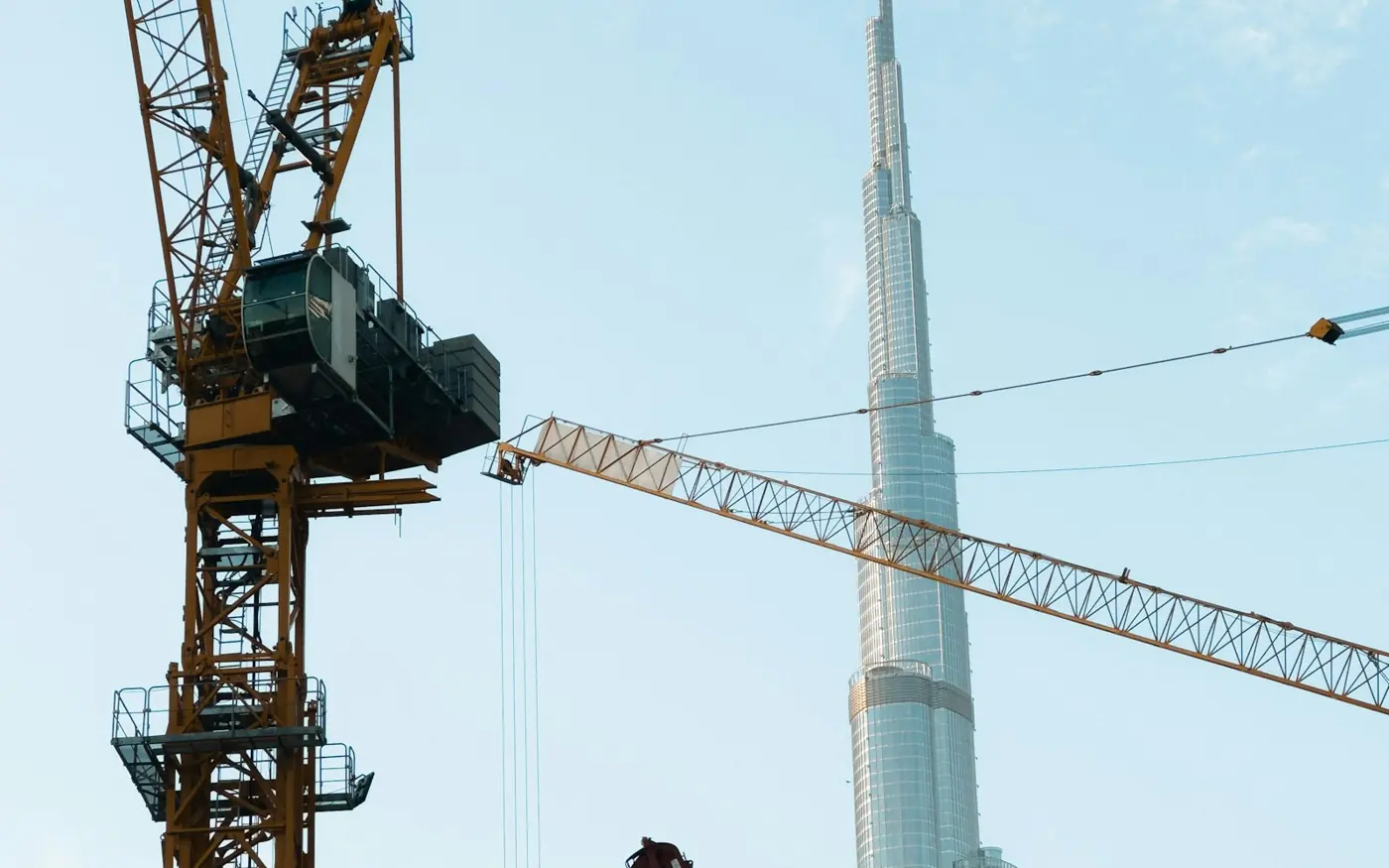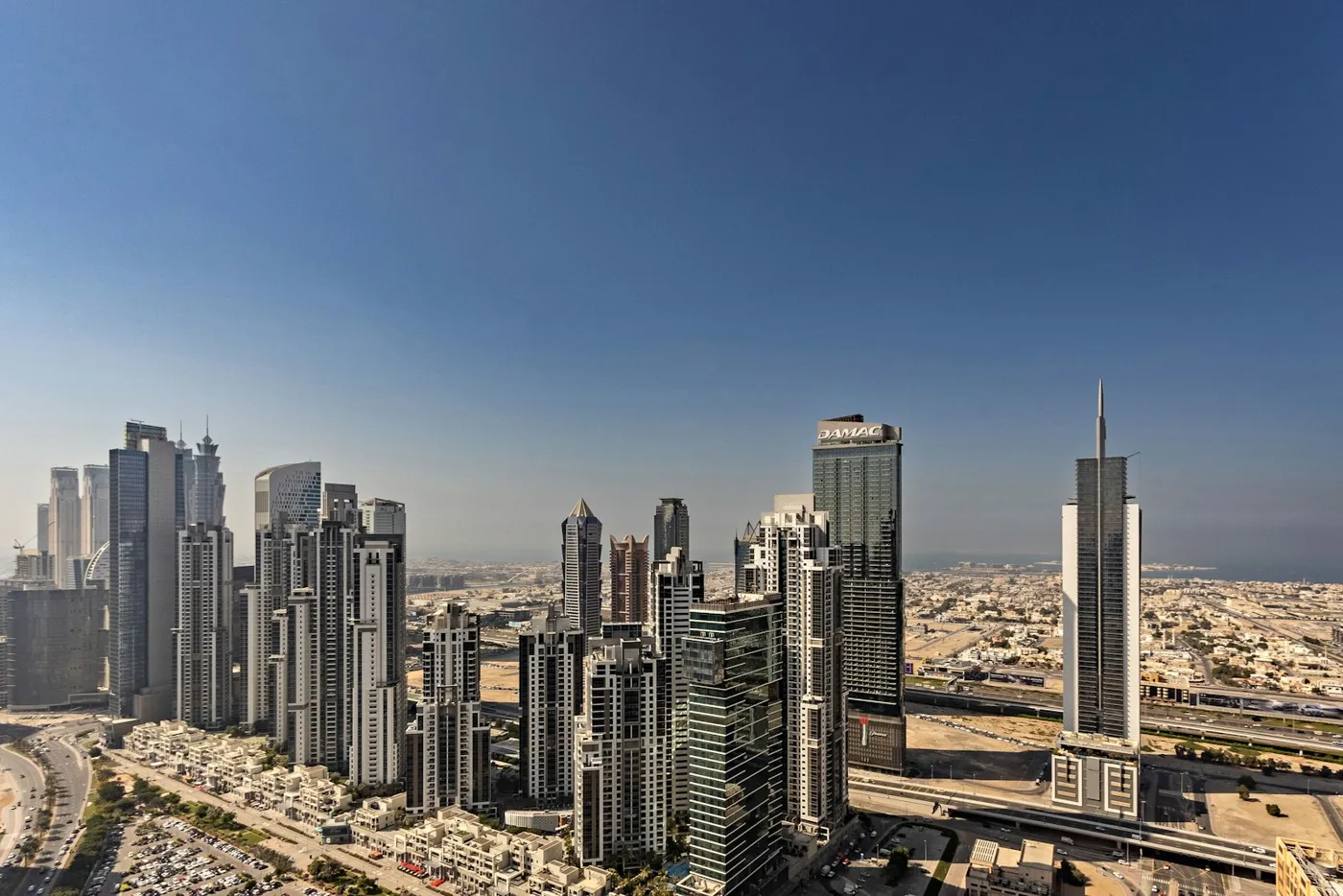


The United Arab Emirates is changing the way its economy earns a living. For decades, oil carried the budget; today the country is putting its weight behind data, cloud computing and UAE artificial intelligence programmes that reach from government counters to giant data centres. This guide explains what is actually happening, which official strategies drive it, and why investors who follow the Dubai and Abu Dhabi property markets should pay attention.
Every figure below comes from an official government page or a named news report, and each source is linked at the end of the article. Where a date or number is not public, we say so instead of guessing.
Table of Contents
- Why UAE artificial intelligence matters for the economy
- The national AI strategy and the digital economy target
- Abu Dhabi: an AI-native government by 2027
- Stargate UAE and the race for AI infrastructure
- What AI means for the non-oil economy
- How the UAE attracts global technology companies
- UAE artificial intelligence in smart cities
- New investment opportunities in the digital economy
- The impact on UAE real estate
- What to watch: risks and open questions
- Frequently asked questions
- Official sources
Why UAE Artificial Intelligence Matters for the Economy
The UAE has been moving from a resource-based model toward a knowledge-driven, digital and technology-focused economy. Artificial intelligence sits at the centre of that shift because it touches almost everything the state and the private sector do: licensing, banking, logistics, energy, health and construction.
Three reasons explain why the country treats UAE artificial intelligence as a long-term economic priority rather than a passing trend:
- Diversification. Technology and services reduce dependence on oil revenues.
- Efficiency. Automated and predictive services lower the cost and time of public administration.
- Competitiveness. Countries that host AI talent and computing power attract capital, research and high-skilled residents.
The result is a policy environment where UAE artificial intelligence is discussed in the same breath as housing, infrastructure and foreign investment, not as a separate technical topic.
The National AI Strategy and the Digital Economy Target
The federal framework is the UAE National Strategy for Artificial Intelligence 2031, the backbone of UAE artificial intelligence policy. According to the UAE Government Portal, its objective is to make the UAE a world leader in AI by 2031, and it is implemented through the UAE Council for AI, which works through committees and sub-councils.
Several supporting programmes sit around the UAE artificial intelligence strategy:
- UAE Council for AI: oversees AI integration in government and education, proposes policies and encourages public-private and international collaboration.
- CEO for AI role: a new position in ministries and federal entities covering AI strategy, governance, adoption, advice, awareness and skills.
- National Program for AI (BRAIN): a consolidated hub of resources on AI and robotics, aimed at making the UAE a leading responsible AI user.
- Generative AI guide: a government guide covering generative AI use, data privacy and about 100 use cases for public services and other fields.
- DIFC AI and coding licence: launched to attract AI firms and coders, with access to the DIFC Innovation Hub and Golden Visa options for employees.
On the economic side, the UAE Digital Economy Strategy, launched in April 2022, aims to double the digital economy’s share of GDP from 9.7% to 19.4% over ten years. That target explains why UAE artificial intelligence spending is framed as an economic programme and not only a technology one.
Abu Dhabi: An AI-Native Government by 2027
Abu Dhabi has taken the most explicit position among the emirates. The Abu Dhabi Government Digital Strategy 2025–2027, run by the Department of Government Enablement, aims to make the emirate the world’s first fully AI-native government across all digital services by 2027.
The published targets give a sense of scale:
- AED 13 billion of investment across 2025–2027.
- 100% adoption of sovereign cloud computing for government operations.
- 100% of government processes digitised and automated.
- More than 200 AI solutions implemented across government services.
- An expected contribution of over AED 24 billion to Abu Dhabi’s GDP by 2027 and more than 5,000 jobs, supporting Emiratisation.
The UAE artificial intelligence plan for Abu Dhabi also names its partners: Mohamed bin Zayed University of Artificial Intelligence for upskilling, the Advanced Technology Research Council for large language models, and G42 for AI infrastructure. An “AI for All” programme trains residents to use AI tools, which matters because UAE artificial intelligence only creates value if people and businesses can use it.
Alongside the Digital Strategy, the Abu Dhabi AI and Advanced Technology Council drives investment, research, partnerships and digital infrastructure with the stated goal of making the emirate an AI hub.
Stargate UAE and the Race for AI Infrastructure
Strategies need computing power to be real, and UAE artificial intelligence is no exception. The most visible project is Stargate UAE, a 1 GW AI compute cluster in Abu Dhabi that forms part of the wider 5 GW UAE–US AI Campus. Khazna Data Centers, a G42 company, is developing the cluster, and the partnership involves OpenAI, Oracle, Nvidia, Cisco and SoftBank.
Based on reports published in 2025, the first 200 MW phase was scheduled for completion in 2026, and G42 said in October 2025 that construction was advancing and long-lead equipment had been procured. Timelines for the rest of the 1 GW cluster and the 5 GW campus have not been confirmed publicly, so treat any later dates you see with caution.
Why does UAE artificial intelligence infrastructure matter beyond technology? Data centres need land, power, cooling, skilled engineers and housing for the people who run them. Large UAE artificial intelligence infrastructure projects therefore create demand across construction, energy and, indirectly, residential and commercial property.
What AI Means for the Non-Oil Economy
Expanding non-oil sectors is one of the UAE’s central economic goals. Investment in advanced technologies is expected to change several industries at once.
Technology and Startups
A growing UAE artificial intelligence ecosystem attracts startups, innovation centres and international technology firms. This creates opportunities for technology entrepreneurship, research and development projects and new digital businesses.
Government Services
UAE artificial intelligence helps public institutions speed up administrative processes, reduce bureaucracy, improve service quality and offer smarter digital experiences to residents and businesses. The Abu Dhabi targets above are the clearest example of this approach.
Financial Sector
Banks and financial institutions can apply UAE artificial intelligence tools to data analysis, risk management, fraud prevention and personalised financial services. For property buyers, this can eventually mean faster mortgage assessment and smoother payment checks, although each lender decides how far to automate.
Real Estate and Construction
UAE artificial intelligence is expected to play a larger role in the property sector through market analysis, smart building management, urban planning, housing demand forecasting and automated property services. Dubai is already moving in this direction; see our reports on the digital revolution in Dubai’s real estate market and on the Dubai Land and Google Cloud partnership.
How the UAE Attracts Global Technology Companies
One visible outcome of the digital strategy is the growing presence of international technology companies. For companies working on UAE artificial intelligence, the country offers advanced infrastructure, investor-friendly regulation, a strategic global location and access to regional markets.
Free zones and financial centres add to the pull. The DIFC AI and coding licence is a clear example: it pairs a business licence with access to an innovation hub and Golden Visa options for employees, so a company can bring its people as well as its capital.
This growth contributes to:
- Higher foreign investment.
- Technology knowledge transfer.
- Specialised jobs for residents.
- Expansion of local innovation companies.

UAE Artificial Intelligence in Smart Cities
The UAE is not limiting technology development to government forms and portals. It is also building the cities of the future. In Dubai and Abu Dhabi, digital technologies are being developed across smart transportation, energy management, urban security, public services and smart buildings.
The goal of UAE artificial intelligence in urban planning is a city that provides faster, more efficient and more intelligent services to residents and businesses. For a resident, that can mean quicker permits, better traffic management and more responsive public services. For an investor, it means districts that are planned with digital infrastructure from the start.
New Investment Opportunities in the Digital Economy
Growth in the digital economy and UAE artificial intelligence opens routes for international investors, including:
- Information technology companies.
- Artificial intelligence startups.
- Data centres and related infrastructure.
- Software businesses.
- Digital infrastructure projects.
Each route has its own regulation, licensing and risk profile. A founder opening a software company faces different rules from an investor buying a unit in a business district, so it is worth taking specialised advice before committing capital. UAE artificial intelligence is a broad theme, not one single investment.
The Impact of Digital Transformation on UAE Real Estate
Technology growth, including UAE artificial intelligence, does not stay inside the technology sector. It also affects the property market through the people and companies it attracts. With more international technology companies and skilled professionals in the country, demand is expected to grow for:
- Modern office spaces.
- Smart buildings.
- Advanced residential projects.
- Technology-enabled communities.
As a result, expansion of the digital economy could become one of the supporting factors behind long-term growth in Dubai and Abu Dhabi property. This is an expectation, not a guarantee: property prices also depend on supply, interest rates, regulation and global conditions.
The market is already digitising on its own terms. Our analysis of digital transformation in the UAE rental market shows how data and online services are changing tenancy, and the same logic applies to sales, valuation and registration.
Investors who want to link the AI story to a concrete property decision can start with three practical steps:
- Follow the talent. Areas close to business districts, free zones and universities tend to attract technology professionals.
- Check the building quality. Smart-building features and good connectivity matter more as tenants become more technology-focused.
- Verify every transaction officially. Use the Dubai Land Department or Abu Dhabi Real Estate Centre records, and do not rely on marketing claims alone.
What to Watch: Risks and Open Questions
A balanced view of UAE artificial intelligence also includes the uncertainties, and they are worth knowing before you invest.
- Timelines can move. Large infrastructure projects such as Stargate UAE publish target phases, and later phases have no confirmed dates.
- Targets are not results. Government goals for 2027 or 2031 describe intent; progress should be checked against later official reports.
- Talent and regulation. Attracting and keeping skilled professionals, and keeping data and AI rules clear, will shape how fast the ecosystem grows.
- Property is cyclical. A strong technology story supports demand but does not remove market cycles.
Through major investment in UAE artificial intelligence and the digital economy, the UAE is moving from a regional economic centre toward a global technology player. The combination of government investment, advanced infrastructure, international technology partnerships and skilled talent can push the economy into a new phase of sustainable growth. For the UAE, artificial intelligence is not only a new technology; it is a key part of a long-term strategy to build a diversified, modern and globally competitive economy.
Frequently Asked Questions About UAE Artificial Intelligence
What is the UAE National Strategy for Artificial Intelligence 2031?
It is the federal plan to make the UAE a world leader in artificial intelligence by 2031. The UAE Council for AI implements it through committees and sub-councils, and it covers government services, education, health, transportation and other sectors, according to the UAE Government Portal.
How much is Abu Dhabi investing in its digital strategy?
The Abu Dhabi Government Digital Strategy 2025–2027 plans AED 13 billion of investment over three years. It aims to make Abu Dhabi the first fully AI-native government by 2027 and expects over AED 24 billion in added GDP and more than 5,000 jobs.
What is Stargate UAE?
Stargate UAE is a planned 1 GW AI computing cluster in Abu Dhabi, part of a 5 GW UAE–US AI Campus. G42’s Khazna Data Centers is developing it with partners including OpenAI, Oracle, Nvidia, Cisco and SoftBank. The first 200 MW phase was targeted for 2026.
What is the UAE Digital Economy Strategy target?
The strategy, launched in April 2022, aims to double the digital economy’s share of GDP from 9.7% to 19.4% over a ten-year period. It also seeks to strengthen the UAE’s position as a regional and global hub for the digital economy.
How does UAE artificial intelligence affect real estate?
UAE artificial intelligence can influence property through market analysis, smart building management, urban planning and automated services. A growing technology workforce may also raise demand for modern offices, smart buildings and residential projects, although prices still depend on supply, interest rates and wider market conditions.
Can AI professionals get UAE residency?
Some routes exist for UAE artificial intelligence specialists. The DIFC AI and coding licence, for example, gives access to the DIFC Innovation Hub and Golden Visa options for employees. Eligibility depends on the licence and the individual case, so confirm requirements with the relevant authority before applying.
Is buying property in Dubai or Abu Dhabi a good way to invest in the AI boom?
Property is an indirect route to the UAE artificial intelligence boom. Technology growth may support demand for homes and offices, but it is not guaranteed. Compare locations, developer track record, payment terms and official registration, and speak with a licensed adviser before you decide to invest.
Next Step: Talk to a Property Specialist
Ready to start investing in Dubai?
For a free consultation and access to the latest property opportunities in Dubai and the UAE, get in touch with Master Real Estate. We help you choose the right project, review payment plans, understand residency options and build a secure investment strategy.