
New Dubai Law to Regulate “Shared Housing”
One of the Most Important Developments in the Rental Market in 2026
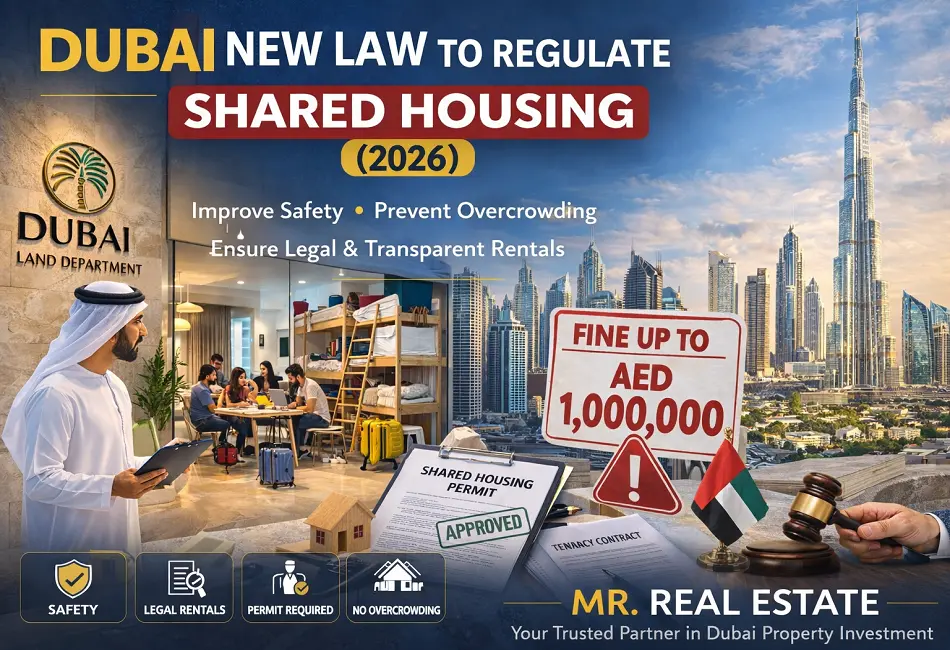
In 2026, the Dubai government introduced a new law aimed at controlling overcrowding in residential units and combating illegal rentals. The regulation focuses on organizing shared housing and multi-tenant rental arrangements across the emirate.
The law was issued by the Government of Dubai and is implemented in coordination with several authorities, including the Dubai Land Department, Dubai Municipality, and the emirate’s Real Estate Regulatory Authority (RERA).
These regulations are part of Dubai’s broader efforts to improve building safety, regulate the rental market, and prevent excessive overcrowding in residential units.
Example “Sources” section you can place at the end of the article
Sources
- Dubai Media Office – Government announcement of Dubai Law No. (4) of 2026 regulating shared housing. (Government of Dubai Media Office)
- ARN News Centre (UAE official media partner) – Report on the new shared housing regulation and penalties. (ARN News Centre)
- The National (UAE) – Coverage of fines up to AED 1 million for violations. (The National)
- Gulf News / Khaleej Times – Details of permits, occupancy rules and implementation. (Khaleej Times)
Main Objective of the New Law
In recent years—particularly in more affordable areas of Dubai—a type of rental arrangement known as “bed-space” or “partitioned apartments” became increasingly common.
In this setup:
- A single apartment is divided into multiple small sections
- Several people may live in one room or even share bunk beds
- Some apartments are converted into informal dormitory-style housing
This type of accommodation expanded due to rising rental prices in Dubai, but authorities consider it unsafe and illegal in many cases.
The new law was therefore introduced to achieve several goals:
- Prevent excessive overcrowding in apartments
- Control illegal and unlicensed rental arrangements
- Improve building safety and reduce fire risks
- Bring greater order and transparency to the rental market
Mandatory Licensing for Shared Housing
Under the new regulations:
- Property owners or tenants cannot rent a residential unit to multiple occupants without obtaining official approval.
- Permits must be issued through the Dubai Land Department and the relevant real estate regulatory authorities.
- All rental contracts must be officially registered through the Ejari system.
Ejari is Dubai’s official system for registering tenancy contracts. It allows authorities to monitor the rental market and prevent fraud or illegal leasing activities.
Occupancy Limits and Housing Standards
Dubai authorities have already established standards regarding living space in residential units. According to municipal regulations:
- Each resident must have at least 5 square meters of living space
- Rooms must provide adequate lighting and ventilation
- Converting kitchens or bathrooms into sleeping areas is strictly prohibited
(Source: Emirati Times)
Additionally, installing temporary wooden or plastic partitions to divide apartments is considered illegal because it may create serious safety risks.

Heavy Fines for Violations
The new law imposes strict penalties on violators:
- Initial fines may reach up to AED 500,000
- Repeat violations can result in fines as high as AED 1 million
Violations may include:
- Illegal renting of bed spaces or sleeping areas
- Unauthorized subdivision of residential units
- Housing more occupants than legally permitted
- Renting units without registering the tenancy contract
These penalties reflect Dubai’s stricter approach to maintaining order in the housing market and improving urban safety standards.
Why the Regulations Were Strengthened
Several factors led the Dubai government to tighten these housing regulations in recent years:
1️⃣ Population Growth and Rising Housing Demand
Dubai’s population continues to grow rapidly, with millions of expatriates moving to the city for work. Many residents turn to shared housing due to high rental costs.
2️⃣ Safety Concerns
Several fires in residential buildings have been linked to illegally partitioned apartments, raising serious safety concerns.
3️⃣ Maintaining Living Standards
As a global city, Dubai aims to maintain high standards for housing quality and safety.
Impact on Dubai’s Rental Market
Real estate analysts believe the new regulations will have several important effects:
Increased Market Transparency
All rental agreements must be officially registered, reducing informal and illegal leasing practices.
Higher Demand for Smaller Units
Workers and lower-income residents may increasingly seek studio apartments or officially approved staff accommodation instead of informal shared housing.
Reduction in Overcrowded Apartments
Units previously converted into unofficial dormitories will likely be regulated, modified, or closed.
Legal Framework of Dubai’s Rental Market
In addition to the new regulations, Dubai’s rental market is governed by several key laws, including:
- Dubai Law No. 26 of 2007 regulating relationships between landlords and tenants
- Its amendment under Law No. 33 of 2008
- Oversight by RERA (Real Estate Regulatory Agency) under the Dubai Land Department
(Source: Bayut)
These laws form the legal foundation of Dubai’s rental market.
The new shared housing regulation represents one of the most significant changes in Dubai’s residential market in 2026. Through these rules, the government aims to:
- Reduce illegal rentals and overcrowding
- Improve building safety standards
- Make the rental market more transparent and regulated
Given the strict penalties and increased oversight, the structure of Dubai’s rental market is expected to become more organized and better regulated in the coming years.
📞 Ready to start investing in Dubai?
For free consultation and access to the latest property opportunities in Dubai and the UAE,
get in touch with Master Real Estate.
We guide you in choosing the right project, reviewing payment plans, obtaining residency,
and building a secure and profitable investment strategy.
With access to updated below-market property listings and expert market insights,
you can confidently make decisions and start your Dubai property journey the smart way.