
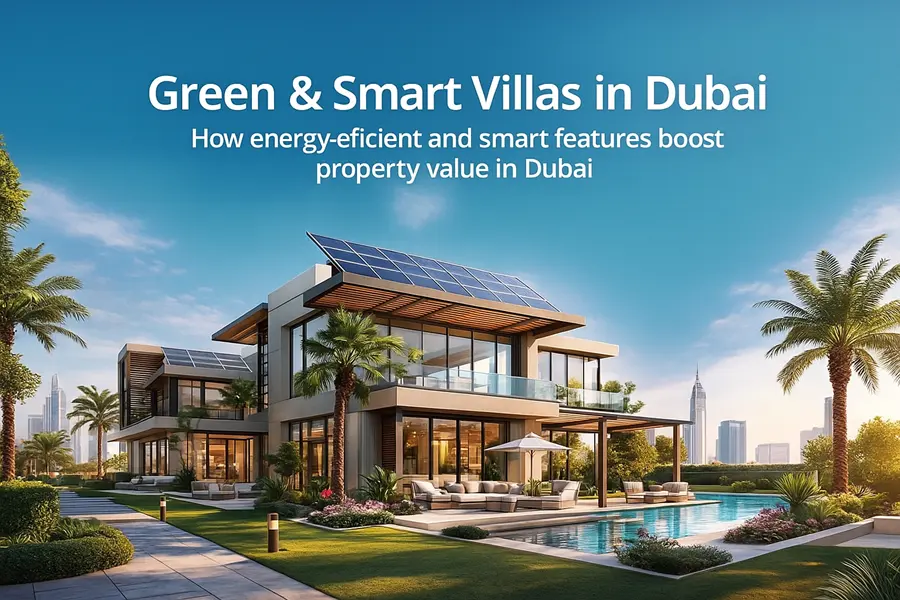
Green & Smart Villas in Dubai
How energy‑efficient and smart features boost property value in Dubai
In Dubai’s real estate market, the trend of sustainability is rapidly advancing. Buyers and investors now place greater importance on “green” home features — like energy efficiency, smart systems, reduced water consumption, and sustainable construction materials. This shift is not just driven by environmental responsibility, but also has a real impact on rental and sale prices.
What “energy-efficient” or “smart” features are being seen in Dubai properties?
Based on market analysis:
- Many new villas are equipped with smart‑home systems: remotely controllable lighting, intelligent HVAC (air‑conditioning), and water‑leak sensors. (The National)
- Some developments include solar‑ready roofs and smart electricity meters. (The National)
- There are communities with electric‑vehicle (EV) charging stations. (The National)
- Building materials are designed for high thermal reflectivity (e.g., special glazing) to reduce cooling energy demand. (The National)
- Several projects hold international green building certifications, such as LEED, or local equivalents. (Argaam Plus)
Financial Benefits for Owners or Investors
a) Lower Running Costs
Energy-efficient and smart features help reduce electricity and water consumption, which translates directly into lower utility bills. For instance, smart central cooling systems allow more optimized energy use. (Many large developers such as Emaar use very efficient district-cooling systems.) (Emaar Properties)
As a result, maintenance cost for tenants or owners is lower — which benefits long-term investors.
b) Higher Rental Premiums
Villas with green or smart credentials can command 8–12% higher rent compared to similar units without those features. (The National)
The appeal comes from lower utility costs and greater comfort, making them more attractive to tenants.
c) Resale Premium
These smart or green villas may sell for 4–7% more than standard properties. (The National)
This suggests that investing in sustainable features can pay off in the long run, especially for owners who plan to resell.
d) Future-Proofing
Given Dubai’s ambitious sustainability goals (such as lower carbon emissions and efficient energy use), properties built with green architecture may be less likely to become outdated. Investors who hold the property for many years may particularly benefit from these features.
Government Policies & Official Actions in Dubai Supporting Energy Efficiency
Here are some key governmental initiatives that show green buildings are not just a trend, but part of a strategic urban policy in Dubai:
- The Dubai Supreme Council of Energy (DSCE), together with the Regulatory & Supervisory Bureau (RSB), launched the Building Energy Management Accreditation Scheme (BEMAS). (DEWA)
- In April 2024, RSB and the Dubai Land Department / RERA held a workshop to promote energy‑management policies for jointly‑owned buildings (e.g., apartment buildings). (DEWA)
- According to RSB, buildings with good energy‑management practices can reduce operational costs (electricity + water), boosting both environmental and financial value for owners. (RSB Dubai)
- Emaar, one of Dubai’s major developers, lists energy efficiency and green building certification as a core part of its ESG (environmental, social, governance) strategy. (Emaar Properties)
- Other sustainability efforts in Dubai align with broader goals like the Dubai Clean Energy Strategy 2050 and the UAE Net Zero Emissions Strategy, reinforcing that green real estate is part of a long-term vision. (DEWA)
Risks & Things Buyers Should Watch Out For
- If green or smart features were added as optional upgrades, you need to carefully assess their cost vs benefit to make sure the ROI is justified. (The National)
- Ask the developer or broker for proof of certification: just calling a building “green” or “smart” isn’t enough — you should verify certifications like LEED, or other recognized standards. (The National)
- Check the monthly service or maintenance charge: smart / energy‑efficient systems sometimes require more maintenance, which could raise costs. (The National)
- Timing matters: when the property is handed over, the “green premium” may be different depending on how mature the sustainability market is, so calculate your expected returns based on your holding period.
Conclusion
For investors thinking about buying property in Dubai, particularly villas to rent out or hold long-term, prioritizing green and smart features is a smart move. These properties don’t just align with environmental values — they deliver real financial upside: higher rents, better resale value, and lower operating costs.
Also, because Dubai’s government is actively supporting energy efficiency (through programs like BEMAS) and major developers are committing to green building practices, this trend is not a fad — it’s strategic.
If you’re writing content for your site, you could use a section titled something like: “Why Green Features in Dubai Property Are a Future‑Smart Investment”, and include examples (like LEED‑certified projects) to illustrate.
Sources
Here are the main sources I used:
- The National: analysis of green / smart features and their impact. (The National)
- Estate Magazine: green building projects in Dubai. (estatemagazine.ae)
- Xploon (blog): smart green home communities. (Xploon)
- RSB / Dubai energy‑management (BEMAS) information. (DEWA)
- Emaar ESG / sustainability report. (Emaar Properties)